



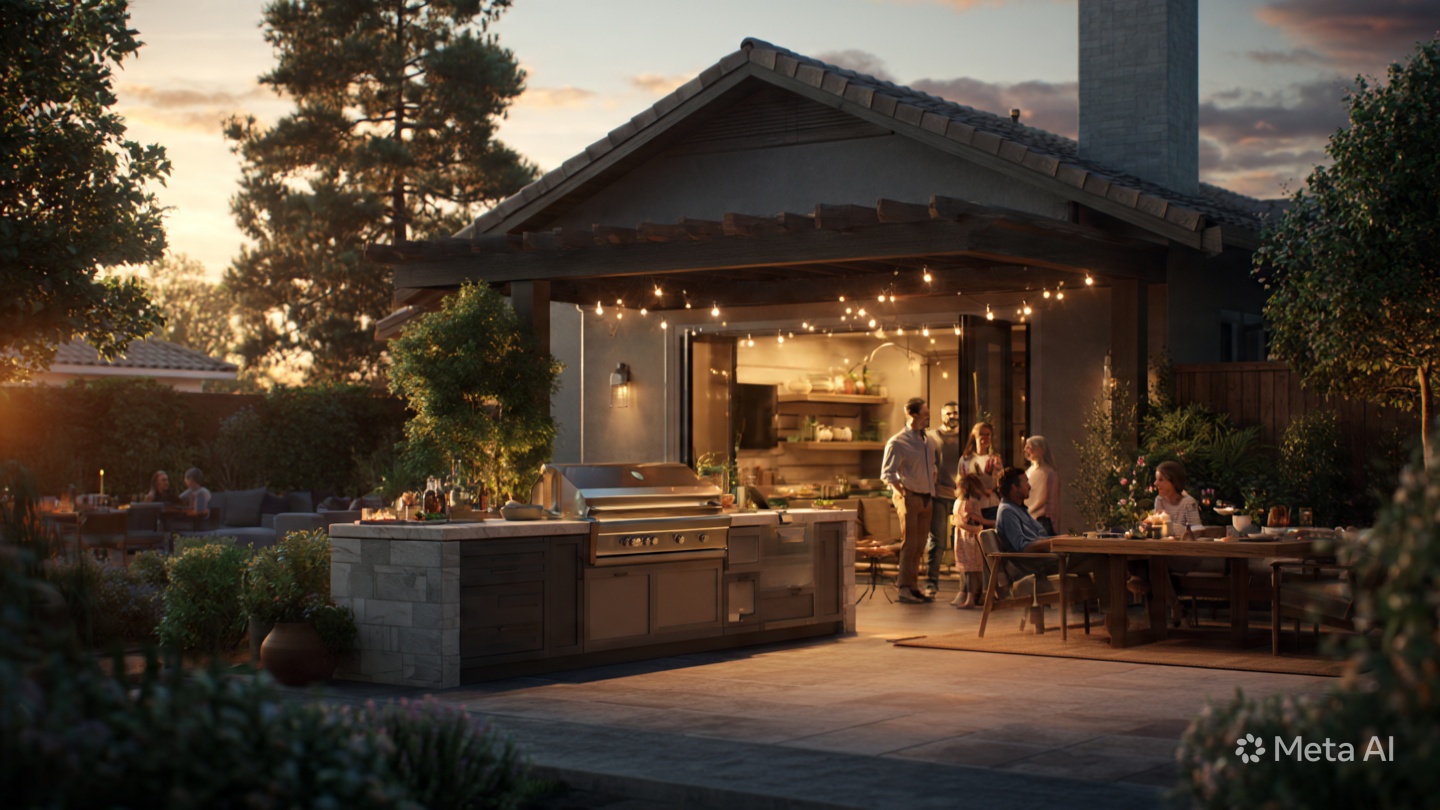
A backyard kitchen looks incredible in photos. The stone counters, the built-in grill, the string lights overhead — it’s the kind of space that practically begs you to host every weekend. But here’s the part nobody tells you: a surprising number of outdoor kitchens end up barely touched after the first season. Not because they’re poorly built, but because they were designed around the idea of outdoor cooking instead of the actual day-to-day reality of it.
If you’re dreaming of a backyard kitchen — or you’ve already got one that isn’t pulling its weight — this guide is for you. We’re going to walk through the design choices that separate a beautiful showpiece from a space you’ll genuinely live in.
1. Start With How You Actually Cook (Not How You Wish You Did)
Before you sketch a single counter or pick out a single appliance, be honest with yourself about your cooking habits. Are you a low-and-slow smoker person? A quick weeknight burger flipper? A pizza-night family? A serious entertainer who hosts twenty people at a time?
The answer changes everything. A smoker enthusiast needs different real estate than someone who mostly makes Saturday brunch for four. If you build for a fantasy version of your life, you’ll end up with a kitchen designed for a stranger.
Write down the five meals you’d most realistically cook outside. Design around those, not Pinterest.
2. Place It Close to the Indoor Kitchen
This is the single biggest mistake homeowners make. They tuck the outdoor kitchen into the prettiest corner of the yard — far from the back door, far from the fridge, far from the bathroom. It looks great. And then nobody uses it because shuttling plates and ingredients across the lawn gets old by week two.
The closer your outdoor kitchen is to your indoor one, the more it gets used. Aim for a setup where you can walk from your inside prep area to your outside grill in under fifteen seconds, ideally without going up or down stairs.
3. Plan the “Work Triangle” Outdoors Too
Indoor kitchen designers talk about the work triangle — the path between sink, stove, and fridge. The same principle applies outside. Your grill, your prep counter, and your cold storage (whether that’s a built-in fridge or a cooler station) should form an efficient triangle. No more than a few steps between each.
When that triangle gets stretched too wide, every meal becomes a marathon. When it’s too tight, you’re bumping elbows with guests.
4. Build for Shade, Not Just Sun
People design backyard kitchens for golden-hour photos and forget that for half the day, that gorgeous south-facing patio is hotter than the grill itself. If your kitchen sits in direct sun without any cover, you’ll cook in it about three times before quietly retreating indoors.
Consider a pergola, a permanent roof structure, a shade sail, or strategic landscaping. Even partial shade dramatically extends the hours the space is usable.
5. Don’t Underestimate Counter Space
Indoor kitchens have multiple counters, an island, and usually a kitchen table to spread out on. Outdoor kitchens often get one cramped strip of stone next to the grill — and homeowners are stunned when food prep feels miserable.
A good rule of thumb: aim for at least 18 inches of clear counter on both sides of your grill. If you’re planning to do real prep work outside (not just grilling pre-seasoned meat), double that.
6. Choose Materials That Can Take a Beating
This is where a lot of dream projects go sideways. Outdoor kitchens face heat, rain, UV, dust, freezing nights, splashes of marinade, and the occasional spilled drink. Materials that look stunning in a showroom can degrade fast in real conditions.
Stick to weather-rated surfaces: stainless steel for appliances, sealed stone or concrete for counters, porcelain tile or natural stone for flooring. Avoid anything that warns about needing to be “kept dry” — because it won’t be.
If you’re not sure where to start, a good resource is this overview of professionally designed outdoor kitchens, which walks through how the right materials and layout decisions hold up over years of real use.
7. Get the Lighting Right (and Plan It Early)
Outdoor kitchens are most often used in the evening — which means lighting isn’t a decorative afterthought, it’s a functional requirement. You need task lighting over your grill and prep zone bright enough to actually see what you’re cooking, plus ambient lighting that makes the space feel welcoming after dark.
String lights are gorgeous, but they’re not enough on their own. Layer your lighting: overhead task lights, low-glare path lights, and a softer ambient wash for the seating area.
And plan it during construction. Retrofitting outdoor lighting after the patio is poured is a frustrating, expensive headache.
8. Make Seating Part of the Layout — Not an Afterthought
A backyard kitchen without seating nearby is a kitchen people cook at and then leave. The whole appeal of outdoor cooking is being part of the gathering instead of stuck inside while everyone else hangs out.
Build seating into the design from the start. That might mean a bar-height counter facing the grill, a built-in bench along the prep wall, or a dining area positioned so the cook can talk to guests easily. The goal is to make the kitchen feel like part of a room, not a remote workstation.
9. Design for the Cleanup, Not Just the Meal
The fastest way to kill enthusiasm for an outdoor kitchen is to make cleanup miserable. If every meal ends with a 20-minute trek of dishes, grease, and crumbs back into the house, you’ll stop using the space within a month.
Plan for:
- A small outdoor sink (even a basic one is a game-changer)
- A trash/recycling area built into the layout
- Easy-to-wipe surfaces near the grill for grease splatter
- Drainage so you can actually hose the area down
A kitchen that cleans up in five minutes gets used. One that takes forty-five doesn’t.
The Big Idea: Function Drives Beauty Outdoors
Here’s the truth: the most beautiful backyard kitchens are also the most functional ones. When a space is designed around how you actually live — short distances, smart shade, real counter space, easy cleanup — it ends up looking better because it gets used. Wear, patina, and a few well-placed pots and tools turn a sterile showpiece into a real room.
Skip the Pinterest fantasy. Build the kitchen you’ll actually cook in this weekend, and next weekend, and the one after that. That’s what makes a backyard kitchen worth every dollar.

